
A Chicago Staple Meets a New Chicago Experience
There are certain things you simply don't have to explain to somebody from Chicago. Harold's Chicken is one of them.
The mild sauce. The freshly fried wings. The argument over which location makes the best chicken. The familiar experience of knowing exactly what you want before you even walk through the door.
Now imagine taking that Chicago institution and introducing it to a different kind of dining experience.
That's exactly what happened when Prohibition THCafe, a Black-owned THC and hemp establishment located at 2113 S. State Street in Chicago's South Loop, partnered with Harold's Chicken #17, owned by Alicia, to offer THC-infused chicken and eventually catfish.
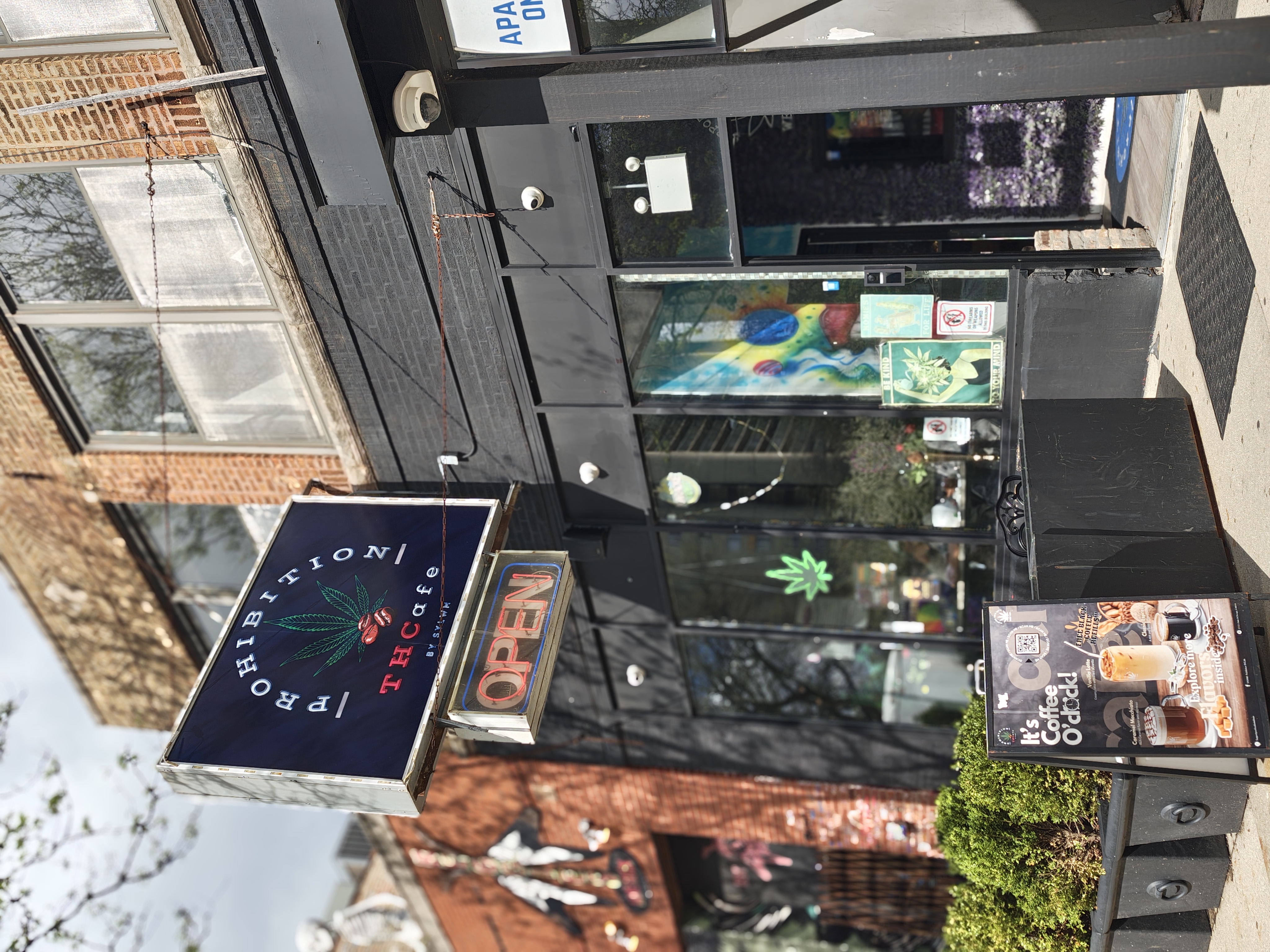
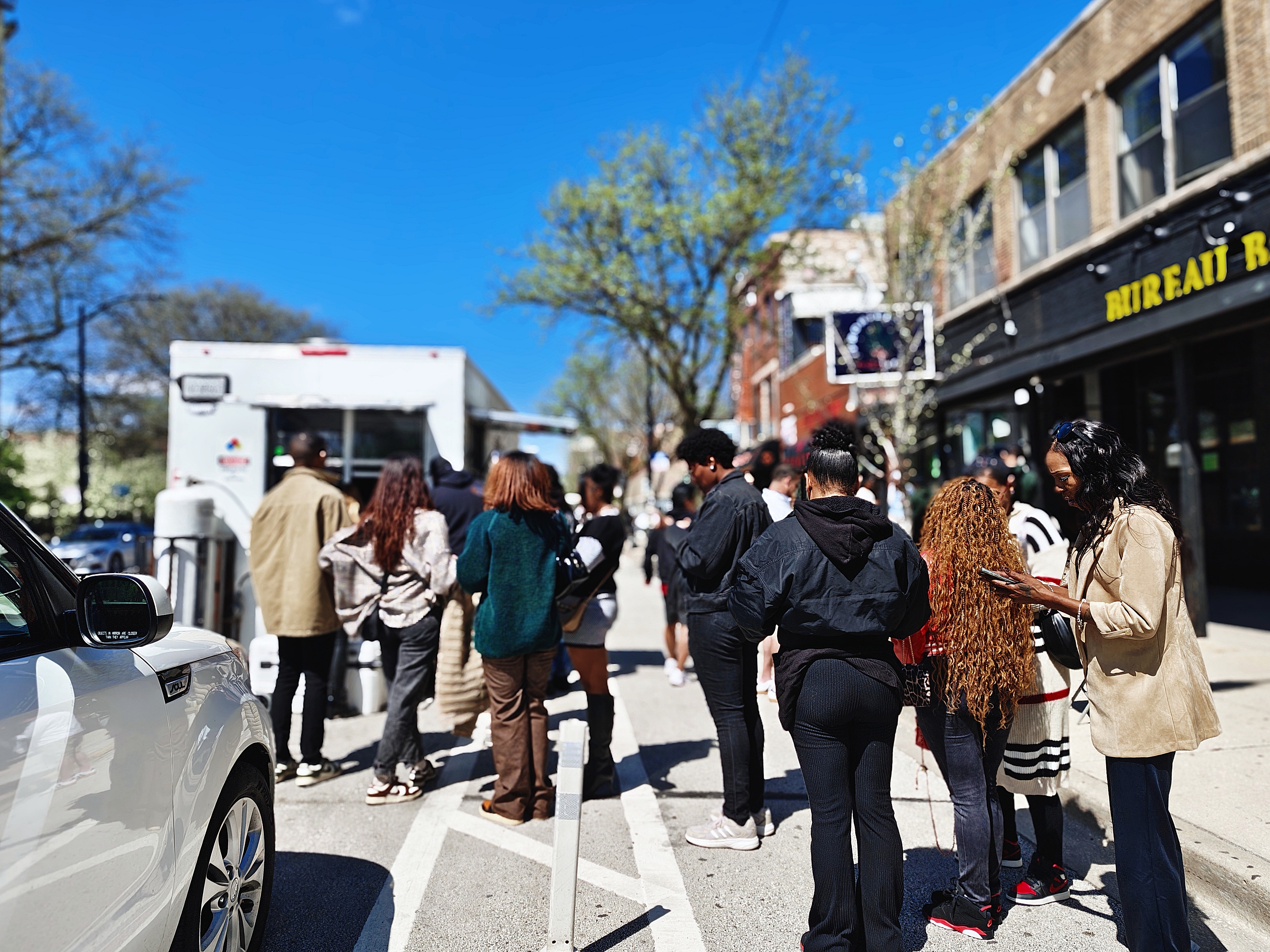
What might sound like an unusual collaboration became something much bigger: a gathering of Chicago culture, Black entrepreneurship, cannabis enthusiasts, curious first-timers, and people willing to stand outside in the cold for a chance to experience it.
BLNT News followed the collaboration through its early events, spoke with the owners and management, and interviewed customers who came from across Chicago and beyond.
The first collaboration, held November 14, 2025, reportedly drew more than 300 attendees, with a line extending roughly half a block and waits stretching toward three hours. The demand was enough to bring the businesses back together on Black Friday, November 28.
By the second event, infused catfish had joined the offerings, and customers were already treating the collaboration as something they didn't want to miss.
The enthusiasm also came with growing pains.
During the Black Friday event, a delayed food truck contributed to extended waits, leaving some customers standing outside in Chicago's unforgiving weather and others unable to remain until their orders were ready.
Still, many stayed.
One customer, who had been waiting approximately three hours, celebrated finally receiving his food. Another described arriving around 3 p.m. and remaining until nearly 6.
For those in attendance, the draw wasn't just about getting high. It was Harold's. It was Chicago. And it was two Black-owned businesses creating something together.
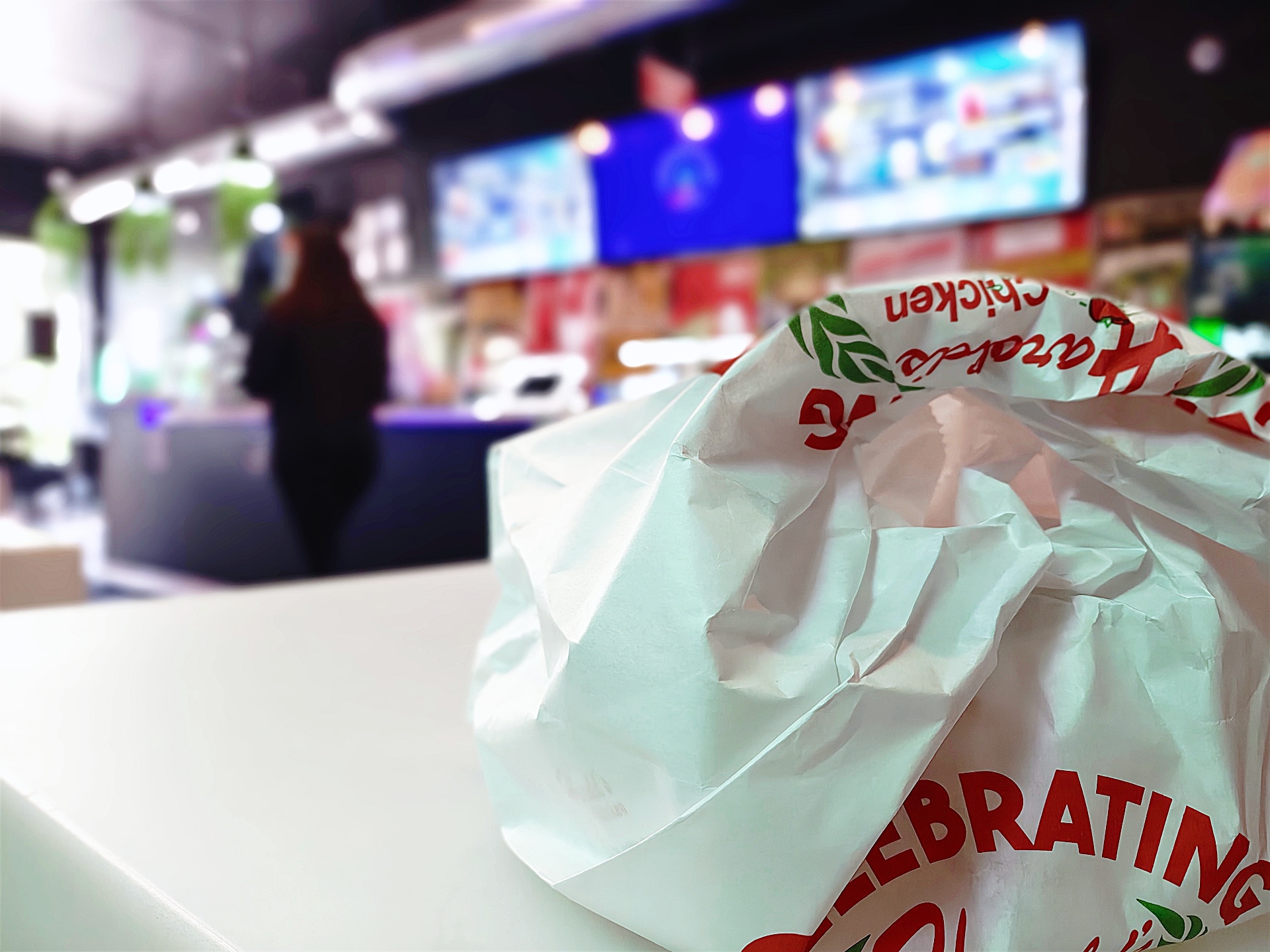
Harold's Chicken: More Than 75 Years of Chicago History
To understand why this collaboration resonated, you have to understand the history of Harold's Chicken.
Founded in 1950 by African American entrepreneur Harold Pierce, Harold's grew from the small restaurant he operated with his wife, Hilda, on Chicago's South Side. Their early establishment, H&H, specialized in dishes including dumplings and chicken feet before the fried-chicken business became a Chicago institution.
Harold's emerged at a time when major fast-food chains often avoided Black neighborhoods and Black entrepreneurs faced substantial barriers to expansion.
The restaurant became more than somewhere to eat. It represented Black business ownership, neighborhood identity, and an entrepreneurial legacy that continues more than seven decades later.
Today, the brand extends beyond Illinois, but its cultural identity remains firmly rooted in Chicago.
Alicia, owner of Harold's Chicken #17, understands that connection.
"Harold's Chicken is Chicago. Chicago is Harold's Chicken. You can't say Chicago without saying Harold's Chicken," she told BLNT News.
For Alicia, the collaboration was an opportunity to bring two businesses together around a product and experience that customers couldn't ordinarily find at their neighborhood chicken counter.
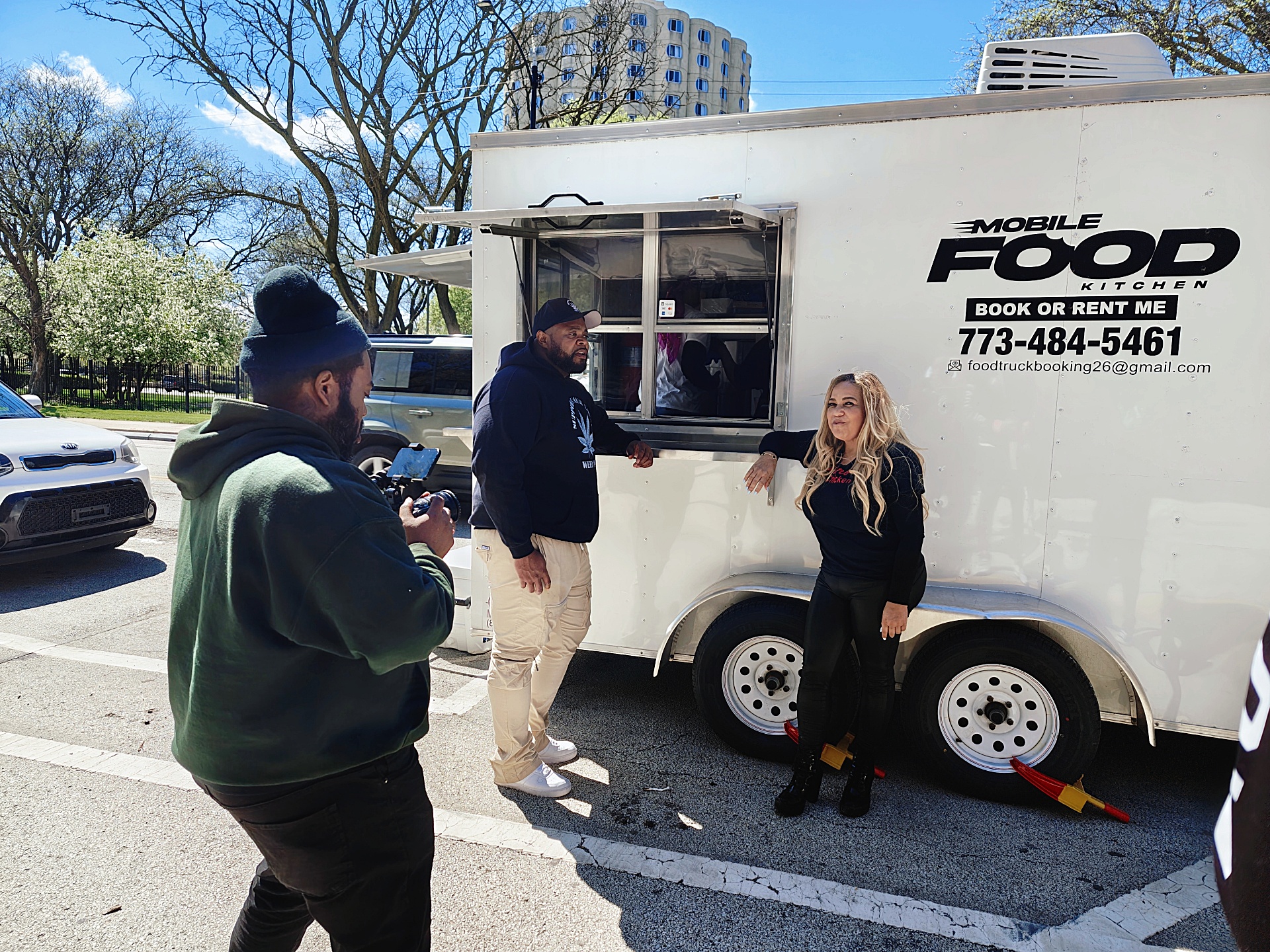
"It lets us know that we can work together, two African American businesses, small businesses, and we bring a special product," she explained.
She also emphasized that the infused offerings are intended for adults 21 and older, with identification checks.
Alicia sees the partnership as an opportunity for future collaborations rather than a one-time novelty.
"We're going to do much more in the future," she said.
The Vision Behind Prohibition THCafe
For Sam Wilson, co-owner of Prohibition THCafe and founder of Support Your Local Weed Man, the business was never intended to operate like a traditional dispensary.
Opened on June 16, 2024, Prohibition was designed to offer something different.
"You go to your typical dispensaries, it's just walk in, it's transactional," Wilson explained. "And we wanted to create a space that community could come together, meet, collaborate, throw different artistic ideas around and enjoy the product."
The concept is rooted in community as much as commerce.
"For us it was bigger than just going home and getting high. It was about kind of building a community around it."
That philosophy is reflected in the cafe's programming.
Beyond THC products, Prohibition has hosted chess gatherings, yoga and wellness activities, paint events, themed social experiences, and community celebrations. Its 2026 programming included a 420 weekend featuring the Harold's collaboration, a smoke bus, and additional activities.
Rather than treating cannabis culture as something confined to retail transactions, the owners envision a space where people can meet, create, relax, and participate in community life.
One of the dispensaries managers, HBK, describes that atmosphere as part of what makes the business meaningful.
During one of the Harold's events, he pointed to the range of activities taking place, from the morning Wake and Bake circuit to the food collaboration and smoke bus.
HBK also views the business through a broader historical lens.
"To be a Black cannabis establishment means everything because they trying to write us out of a history that we carved the lane in," he told BLNT News.
For HBK, the issue is not simply whether Black consumers can purchase cannabis products. It's whether Black entrepreneurs have a fair opportunity to own businesses, build brands, and participate in the profits.
Wilson shares that perspective.
"It's really about being Black and owning a piece of a new industry," he explained. "It's very rare that us as Black people get to access industries in the beginning when it's an infancy state."
He sees Prohibition as both a business and a statement of economic participation.
When the People Show Up
The collaboration's impact becomes especially clear when listening to the customers.
Joya Nicole, who proudly identifies with Chicago's Far South Side, returned for another round of infused Harold's Chicken after enjoying her first experience.
"As a Chicagoan, a real Chicagoan to another Chicagoan, I ain't gonna lie, this place snapped with this," she said.
This time, she brought her best friend, [Kayla].
The pair had preordered their food but still encountered a wait. Rather than remain outside the entire time, they decided to go to the gym and return afterward.
When they came back, their order was ready.
For Joya, the partnership represented something distinctly Chicago.
She described Harold's as a restaurant people grow up eating, where the flavor of the chicken matters just as much as the signature sauce.
But she was equally enthusiastic about seeing an established Chicago food brand collaborate with an emerging Black-owned business.
Another attendee, Shaqueta, known on Instagram and TikTok as @innercityascension, described the event as historic.
"A part of something so historical where something classic as Harold's Chicken has collaborated with them doing THC-infused wings, and now they got catfish," she said.
Shaqueta had missed the earlier event and was determined not to miss another opportunity.
Ebony, another South Side attendee, had a similar experience. She missed the first collaboration because it fell on her birthday and returned for the next one.
Her reason for supporting the businesses went beyond the menu.
"I'm trying to strictly keep my coin to the Black community because we really need it," she explained.
Ebony also spoke about wanting to see more community programs and opportunities for young people.
For her, supporting Prohibition represented an investment in something she wanted to see grow.
The event's appeal wasn't limited to Chicago residents.
Trent and Simone traveled from Indiana, approximately two hours away, to experience the collaboration.
"Harold's Chicken is really that good," Trent said, explaining why combining the restaurant with THC products caught their attention.
Their trip illustrated how a local collaboration could attract visitors from outside the city.
The Reality Behind the Lines
Successful turnout doesn't automatically mean flawless execution.
During the Black Friday collaboration, customers experienced significant delays.
Misha, who helped organize the line and maintain the event's energy, described stepping in to keep attendees engaged after the food truck arrived late.
She moved through the crowd, interacted with customers, and worked to keep the atmosphere upbeat despite the frustration.
According to Misha, the turnout was strong, but some customers eventually had to leave.
"It actually was excellent. It was a great turnout. It's just that a lot of people had to go home," she explained.
Her comments highlight an important reality for growing businesses: creating demand is only part of the equation. Meeting that demand consistently presents its own challenges.
The delays did not erase the enthusiasm of those who stayed, but they were part of the experience.
And as the businesses continued collaborating, the operation evolved, with preorders and additional food offerings becoming part of subsequent events.
The larger question became whether this could eventually grow from an occasional pop-up into a regular offering.
Wilson suggested that the public response warranted exploring that possibility.
"The people spoke. The people want it. The people love it. Give them what they want," he said.
For now, that remains an idea rather than an announced permanent menu item.
Black Ownership in an Industry Black Communities Helped Shape
Behind the celebration is a more complicated economic story.
For decades, Black communities experienced disproportionate consequences from cannabis criminalization, even as the modern legal cannabis marketplace developed into a lucrative commercial industry.
The question facing Black entrepreneurs today is whether legalization has created meaningful access to ownership or simply opened another market in which established businesses and well-financed investors hold the advantage.
Tyrone Muhammad, a co-owner of Prohibition THCafe and co-founder of Support Your Local Weed Man, sees the issue as central to the mission of the business.
"The whole purpose for us fighting for the space of cannabis and social equity was for us as Black people to get our stake and ultimately gain generational wealth," he told BLNT News.
For Muhammad, ownership should create opportunities that extend beyond individual entrepreneurs.
He wants businesses capable of employing local residents, supporting families, and reinvesting in communities.
He argues that the cannabis industry has not adequately delivered on the promise of repairing harms associated with the War on Drugs.
That concern has historical grounding.
Illinois began recreational cannabis sales in January 2020 with an adult-use market composed entirely of majority white-owned businesses that had transitioned from the medical cannabis system, according to the state's Cannabis Regulation Oversight Officer.
Since then, new social-equity licensing programs have diversified the industry. Illinois' 2025 diversity survey reports that 31% of surveyed cannabis firms were majority Black-owned.
Those figures show both the industry's unequal starting point and subsequent changes. They do not, by themselves, establish how much revenue or market share Black-owned businesses control, nor do they eliminate continuing barriers involving financing, licensing, property, and competition.
For entrepreneurs like Wilson and Muhammad, those distinctions matter.
A license, an ownership stake, and a profitable operating business are not necessarily the same thing.
And for hemp businesses operating outside the traditional licensed dispensary structure, the rules present another set of challenges.
Hemp, Regulation, and the Fight for Economic Access
Muhammad says the founders established the Illinois Black Hemp Association to educate Black communities about the wider economic possibilities of hemp.
He wants people to understand that the plant has applications beyond products intended for consumption.
Hemp fibers and other plant materials can be used in textiles, construction materials, industrial products, and other forms of manufacturing.
Muhammad sees those applications as potential pathways into entrepreneurship and wealth creation.
"Our goal is to enlighten the people and bring them to awareness that there's another economic opportunity that we're missing," he said.
But that opportunity is now being debated against a changing legal landscape.
The 2018 Farm Bill federally distinguished hemp from marijuana using a concentration threshold of no more than 0.3% delta-9 THC by dry weight. That framework helped create a substantial market for hemp-derived products, including intoxicating beverages and edibles.
In November 2025, Congress enacted a narrower federal definition of hemp, scheduled to take effect November 12, 2026. Among other changes, the law excludes certain products containing more than 0.4 milligrams of total THC and specified similar cannabinoids per container.
The consequences could be substantial for businesses built around intoxicating hemp products.
Chicago has also debated its own restrictions.
In January 2026, the City Council approved an ordinance targeting many intoxicating hemp products sold outside licensed dispensaries. Mayor Brandon Johnson vetoed the measure in February, and the council failed to override that veto.
That local decision did not cancel the separate federal law.
The debate involves competing concerns.
Supporters of tighter restrictions cite inconsistent product testing, labeling, potency, and the risk of access by minors. Hemp business owners and advocates argue that sweeping restrictions can eliminate legitimate adult-use businesses rather than establish enforceable safety standards.
Muhammad is among those who believe the regulatory environment favors large corporate cannabis interests.
He argues that independent hemp businesses deserve a place in the market and that restrictions could push customers toward unregulated sources.
His concerns reflect the perspective of an entrepreneur whose business model may be affected by these changes. Claims that particular companies or lobbyists deliberately designed the legislation to exclude Black businesses require additional evidence before they can be established as fact.
The stakes, however, extend beyond one cafe.
For independent businesses, changing federal rules can affect product inventory, jobs, future investment, and the ability to continue operating in their current form.
For Black entrepreneurs who see hemp as an accessible entry point into a larger industry, those changes raise questions about who will be able to participate in the next phase of cannabis commerce.
A Place for Culture, Not Just Consumption
Despite the policy uncertainty, Prohibition's founders continue to emphasize the atmosphere they have built.
Muhammad describes the cafe as a place for adults to experience community, connection, and relaxation.
He wants visitors to associate it with positive energy, cultural diversity, and unity.
Wilson describes a business with ambitions beyond its current South Loop location, including proposed additional Chicagoland locations and a potential consumption lounge in Maywood.
Those plans are still developing, but they demonstrate the founders' desire to build something larger than a single storefront.
For Wilson, the South Loop location carries its own significance.
The neighborhood has a complicated history of development, displacement, and changing economic opportunities.
He believes maintaining a Black-owned business presence there matters.
"I think it's major for us to be implanted right here, put our footprint here," he said.
That sense of permanence is part of the founders' message.
They don't want Black entrepreneurs to be treated as temporary participants in a growing industry.
They want to establish businesses that can endure.
More Than a Collaboration
In a city where Harold's Chicken is practically its own cultural language, a collaboration involving infused wings and catfish was bound to get attention.
But the crowds outside Prohibition THCafe reveal something beyond the novelty of the menu.
People came because they recognized the brands, wanted to experience something different, and were interested in supporting businesses they felt represented their communities.
Some waited for hours. Some left because of delays. Others returned after missing earlier events. A few traveled from another state.
The experience wasn't perfect, but it was memorable.
And the entrepreneurs behind it see an opportunity to create something lasting.
For Alicia, the collaboration demonstrates what can happen when Black-owned businesses work together.
For Sam Wilson, it represents community-building and the possibility of expanding a business on its own terms.
For Tyrone Muhammad, it connects to a larger effort to secure ownership and economic participation.
For HBK, it's about refusing to let Black communities be excluded from an industry they helped shape culturally and historically.
And for the customers, sometimes the explanation is simpler.
It's Chicago.
It's Harold's.
It's cannabis culture.
It's an opportunity to support something being built in their own community.
As the industry faces new regulations and questions about its future, businesses like Prohibition THCafe are attempting to establish their place in it.
Wilson's message to other entrepreneurs is straightforward:
"Dream big, don't quit, and be willing to make the sacrifices that's necessary to move forward."
Alicia offers an equally direct reminder:
"Just put the work in. Just put the work in."
For these Chicago entrepreneurs, the goal is not simply to participate in the culture. It's to own a meaningful piece of its future.
Reporting includes firsthand event coverage and interviews with Prohibition THCafe ownership and management, Harold's Chicken #17 ownership, event personnel, and attendees. Public regulatory and industry data were independently reviewed.